According to ERR, he said this at a press conference of the Estonian Ministry of Defence, Ukrinform reports.
Puusepp stressed that the Armed Forces successfully managed to conceal their plans, thus achieving the effect of surprise. ‘Probably, the Russian Armed Forces have problems with the command in this region. For this reason, they were unable to respond effectively to the actions of the Ukrainian Armed Forces, and the actions taken are defensive in nature, meaning they are setting up defensive lines and moving units,’ Puusepp said.
He emphasises that, according to Russian social media, the Russian Armed Forces are expected to launch a counter-offensive soon. ‘However, so far there are no signs that the Russian Armed Forces have enough forces... to deploy such significant actions,’ the Estonian military said.
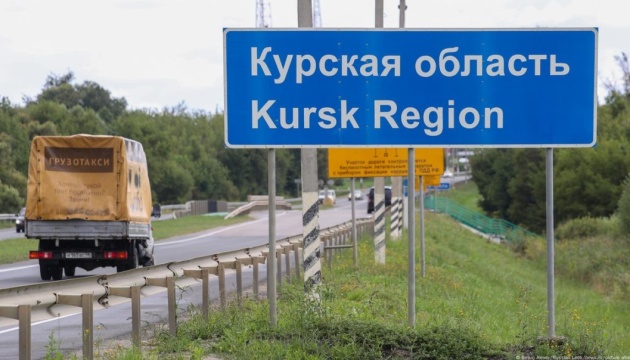
According to him, based on data from open maps, more than 500 square kilometres of Kursk region are under the control of the Armed Forces of Ukraine. However, active operations are taking place in a larger area. The Ukrainian Armed Forces are expanding this area, although the pace is not as fast as it was at the beginning of the attack.
Commenting on the strikes by Ukrainian long-range drones on the airfields of Borisoglebsk, Voronezh, Savasleyka and Kursk, Puusepp noted that this illustrates the approach Ukraine has chosen to fight the Russian air force. According to this approach, priority should be given to strikes on aircraft parked at airfields, paralysing their ground support, and destroying ammunition depots. The aim of the approach is to overcome difficulties in repelling further Russian air attacks.
In addition, according to Puusepp, during the attacks in the Kursk region, Ukraine demonstrated new ways to shoot down enemy helicopters. For this purpose, FPV drones were used, which explode upon contact with the helicopter's rear rotor. As a result, the Russian Armed Forces lost a Mi-28N attack helicopter, a Mig-8 multipurpose transport helicopter, and possibly a Ka-52 attack helicopter. Another Ka-52 was shot down by a man-portable air defence system.
As reported, the offensive operation of the Defence Forces in the Kursk region of the Russian Federation began on 6 August 2024.
Read also: Paratroopers show first hours of offensive in Kursk region
As of now, the Armed Forces of Ukraine have taken control of more than a thousand square kilometres of Kursk region with dozens of settlements.
On 15 August, President Volodymyr Zelensky chaired a meeting of the Supreme Commander-in-Chief's Staff, at which it was announced that a military commandant's office would be established in the controlled territories of Kursk region. Major General Eduard Moskalev was appointed its head.
According to the British newspaper The Independent, the Ukrainian Armed Forces could have captured about 2,000 Russian soldiers during the operation in Kursk region.